

 English
 русский
 Español
 عربى


PVC super clear film turns up in packaging, product displays, protective covers, stationery and many industrial uses. You can see the contents straight through it, and it still works as a physical barrier against dust, moisture and everyday contact. Demand for transparent materials keeps growing, so manufacturers are looking harder at how these films are made and how each production stage shapes the end result.
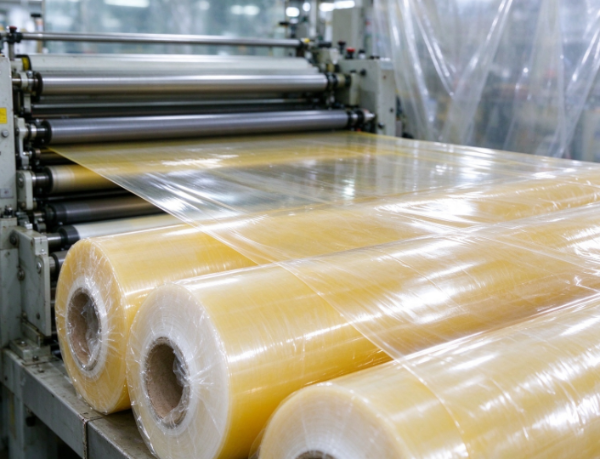
The process is about more than turning raw materials into a thin sheet. Material selection, formulation, mixing, film forming, cooling, surface inspection and packaging all affect how the finished film looks and performs. The stages have to work in step to keep quality steady and meet different application needs.
For buyers, distributors and manufacturers, knowing the process makes it easier to choose products and judge quality. It also explains why films meant for different uses can behave differently, even within the same product category.
What Raw Materials Are Used to Produce PVC Super Clear Film?
A film's quality and character start with its raw materials. Polyvinyl chloride resin is the main material and gives the film its basic structure. Resin alone doesn't settle the final look or feel, though. Other ingredients are usually added to tune flexibility, transparency, processing behavior and surface properties.
The intended use drives material choice. A film for product packaging may have different requirements from one made for protective covers or display materials. Manufacturers need to understand those differences before preparing a formulation.
Common material categories include:
- PVC resin: The primary component that forms the film structure. Its characteristics affect processing behavior and final appearance.
- Plasticizers: These adjust flexibility and softness. The choice affects how the film reacts to bending, folding and handling.
- Stabilizers: These keep the material stable during processing and use, and help the appearance stay consistent through production.
- Processing aids: These help with material handling and processing, and can support the formation of a uniform film.
- Other functional additives: Depending on the application, extra ingredients may be used to adjust surface characteristics or other properties.
Proportions and compatibility matter. A poorly suited formulation can cause uneven transparency, surface irregularities or inconsistent flexibility.
Raw material inspection is part of good production management too. Manufacturers check whether incoming materials meet purchasing requirements. Differences in material condition can affect later stages, so early inspection is a practical way to head off problems.
The goal isn't just to blend a few ingredients. It's to build a formulation that delivers the intended appearance, handling and application performance.
How Does Material Formulation Affect Film Transparency and Flexibility?
Transparency is a main reason buyers pick PVC super clear film. A clear look depends on several factors working together: material compatibility, mixing quality, processing conditions and surface consistency.
The formulation stage decides how the ingredients interact. If components aren't well matched, the film may show uneven clarity or visible surface flaws. That becomes especially noticeable in transparent packaging and product display.
Flexibility matters as well. Some uses need film that bends around products or fits different packaging shapes. Others need a material that holds its form in handling and storage. Manufacturers weigh these needs when adjusting the formulation.
The link between film characteristics and their influencing factors looks like this:
| Film Characteristic | Main Influencing Factors | Application Considerations |
|---|---|---|
| Transparency | Resin quality, ingredient compatibility, processing consistency | Clear product display and packaging |
| Flexibility | Plasticizer selection and formulation balance | Folding, wrapping and protective covers |
| Surface appearance | Material cleanliness and processing conditions | Visual presentation and product appearance |
| Film uniformity | Mixing quality and forming conditions | Consistent handling and processing |
| Material stability | Formulation and production management | Storage and everyday use |
| Surface smoothness | Material preparation and forming process | Printing, packaging and display applications |
No single formulation suits every application. Manufacturers have to think about the intended use instead of fixating on one property.
A film for transparent packaging, for example, may need clear visibility and easy handling. A protective cover may lean more on flexibility and resistance to everyday contact. Such differences shape how raw materials are chosen and combined.
A well-planned formulation also makes later production easier to manage. When materials are compatible, forming becomes more predictable and batch-to-batch variation drops.
What Happens During Raw Material Mixing and Preparation?
Once raw materials are chosen, they go through mixing and preparation. This stage produces a consistent mixture that can be processed into film.
Mixing looks simple, but it has a direct effect on everything after it. If ingredients are spread unevenly, some areas of the material will have different physical properties. That can change transparency, flexibility and surface appearance.
Manufacturers usually organize this stage around several activities:
- Material verification: Incoming materials are checked against the required formulation and production plan, so unsuitable ingredients stay out of the process.
- Ingredient weighing: Each component is measured to the established formulation. Consistency here keeps the material balanced.
- Initial mixing: The ingredients are combined into a uniform mixture. Even distribution keeps material characteristics consistent.
- Material conditioning: The mixture may get extra handling to make it ready for the next stage.
- Preparation inspection: The material's condition is checked before it enters film forming.
Cleanliness counts. Stray particles or foreign substances can hurt the look of a transparent film. Since people often choose film for its appearance, even small defects can stand out during inspection.
Storage and handling shouldn't be overlooked either. Raw materials need suitable conditions to limit contamination or changes in condition. Clear production records also let manufacturers trace material batches if quality concerns come up later.
A stable preparation process gives film production a dependable starting point. It cuts unnecessary variation and makes sure the material entering the next stage behaves consistently.
How Is PVC Super Clear Film Formed During Production?
Film forming is where the prepared PVC material becomes a continuous sheet. It is one of the important steps, since it directly affects thickness consistency, transparency, surface appearance and overall usability.
Manufacturers may use different methods depending on equipment, product requirements and applications. Calendering and extrusion are two common approaches in PVC film production.
Calendering process
Calendering uses a series of rollers to shape the prepared PVC material into a continuous film. The material passes through the rollers and gradually becomes a sheet with the required look and dimensions.
The rollers help shape the film surface. Their condition and the surrounding production environment can affect how uniform the finished material is.
The method is often linked with flexible PVC films. Manufacturers need to watch material distribution, roller condition and process stability throughout.
Extrusion process
Extrusion heats and processes the PVC material, then pushes it through a forming opening to make a continuous film or sheet. The material then moves on through forming and cooling stages.
It takes coordination between material preparation, forming equipment and cooling arrangements. Changes in material flow or processing conditions can alter the film's final appearance.
Both methods demand careful production management. The choice depends on product design, manufacturing capability and quality requirements.
| Production Method | Basic Process | Main Considerations |
|---|---|---|
| Calendering | PVC material passes through rollers to form a continuous film | Roller condition, surface appearance and material distribution |
| Extrusion | Processed PVC material passes through a forming opening | Material flow, film formation and cooling consistency |
Whichever method is used, conditions must stay stable. Sudden swings can lead to uneven surfaces, inconsistent appearance or other defects.
For film, visual consistency is especially important. The film should look clear across its whole surface, without obvious cloudy patches, stray marks or material irregularities.
Why Are Cooling and Surface Treatment Important?
After forming, the film goes through cooling and later handling stages. Cooling lets the material settle and hold its shape. Without good cooling management, the film may deform or change in surface condition.
Cooling also affects how easily the film can be handled afterward. A stable sheet is easier to transport, inspect, cut and prepare for packaging.
It has to be coordinated with forming. If the film cools unevenly, differences can appear across the surface, which hurts the finished product's appearance and dimensional consistency.
Once cooling is done, manufacturers may add surface treatment depending on the product.
Common considerations include:
- Surface cleanliness: Dust, particles and unwanted substances need to be removed or controlled to protect the film's visual quality.
- Surface smoothness: An even surface supports a clean look and can make the material easier to process later.
- Surface protection: Careful handling and protective measures reduce scratches and contact marks.
- Printing compatibility: Some films are meant for printed information or decorative elements, so their surface must support the relevant processing.
- Handling performance: The film should suit winding, stacking, cutting or other operations the final product needs.
Not every film needs the same surface treatment. Some are made for simple transparent packaging, while others need extra preparation for printing, lamination or further fabrication.
Manufacturers should tie surface treatment to the intended application. Needless treatment adds steps without real value, while too little preparation can cause trouble in downstream production.
How Do Manufacturers Inspect PVC Super Clear Film Quality?
Quality inspection runs through production instead of happening once at the end. Manufacturers monitor material condition along the way so problems are caught before they affect large quantities.
For PVC super clear film, appearance is a major concern. Buyers often judge the material by looking through it, checking the surface and seeing how it behaves in the hand.
A practical inspection process usually covers several areas.
Transparency inspection
The film should give the visibility its application needs. Manufacturers look for cloudy areas, visible impurities or uneven transparency.
Surface inspection
Defects can include scratches, wrinkles, marks, particles and other irregularities. These affect how packaged and displayed items look.
Thickness consistency
Uneven thickness changes how the film feels, bends and performs in processing. Manufacturers need to check across the material, not just one spot.
Flexibility evaluation
The film should be flexible enough for its purpose. Testing may involve bending, folding or handling the material under conditions that reflect expected use.
Packaging and handling inspection
Even film that meets production requirements can be damaged by poor handling before delivery. Manufacturers should inspect winding, cutting, stacking and protective packaging.
This table summarizes common inspection areas and the problems they target:
| Inspection Area | Possible Quality Concern | Why It Matters |
|---|---|---|
| Transparency | Cloudiness or uneven clarity | Influences product visibility |
| Surface condition | Scratches, wrinkles or particles | Affects visual appearance |
| Thickness | Uneven material distribution | Influences handling and processing |
| Flexibility | Excessive stiffness or unsuitable softness | Affects application suitability |
| Material consistency | Differences between production batches | Supports stable product use |
| Packaging condition | Dust, moisture or physical damage | Protects the film during transportation |
Inspection standards should follow actual product requirements. A minor surface variation may matter differently on ordinary protective packaging than on a highly visible display.
Communication between production and quality control is just as important. When a defect turns up, the manufacturer has to work out whether it came from raw materials, mixing, forming, cooling or handling. Finding the source stops the same issue from returning.
What Happens After PVC Super Clear Film Is Manufactured?
Once the film passes inspection, it moves to finishing and packaging. This stage readies the material for storage, transport and customer use.
Finishing depends on the product's intended form. Some films ship in rolls, others are cut into sheets or prepared in specific shapes. Manufacturers should consider the customer's processing needs when settling the final format.
Cutting and winding are common finishing tasks. The film should be handled carefully during them to avoid wrinkles, scratches and needless tension. Poor handling can lower the visual quality of an otherwise acceptable product.
Packaging plays a big role. Transparent film is vulnerable to dust, surface contact and poor storage. Protective packaging reduces these risks in transit and in the warehouse.
Typical finishing activities include:
- Slitting and cutting: The continuous film is divided into the required widths or sheet formats.
- Winding: Rolls are arranged for convenient storage and later processing.
- Edge inspection: Edges are checked for irregularities that could affect handling or further fabrication.
- Surface protection: Suitable packaging materials limit contamination and physical damage.
- Product identification: Labels and production records separate different product types and batches.
- Final packaging: Finished rolls or sheets are prepared for storage and transport.
Product identification is especially useful in B2B trade. Buyers may order different film types for different uses, so clear labels cut confusion during receiving, storage and production.
Manufacturers should also look at transport arrangements. Heavy pressure, rough handling or poor storage can affect the film's condition. Protecting the finished material is part of keeping product quality consistent.
How Can Buyers Evaluate PVC Super Clear Film Manufacturers?
Knowing the process gives buyers a firmer basis for judging suppliers. Instead of looking only at appearance or quoted prices, they can examine how a manufacturer handles materials, production, inspection and delivery.
A supplier's capabilities should match the buyer's actual needs. Different applications may call for different mixes of transparency, flexibility, surface condition and product format.
When assessing a film manufacturer, buyers can look at these aspects.
Raw material management
Ask how incoming materials are inspected and stored. A supplier should be able to explain how it manages material selection and keeps batches consistent.
Formulation and product customization
Different applications may need different film characteristics. Buyers can describe their intended use and ask whether the manufacturer can adjust specifications to suit.
Production process management
Knowing whether the supplier uses calendering, extrusion or another method helps buyers judge whether its process fits the product they need.
Quality inspection procedures
Ask which characteristics are checked during production and before delivery. A clear inspection process reduces uncertainty on repeat orders.
Product samples
Samples let buyers examine transparency, flexibility, surface appearance and handling before larger purchases. They also help confirm whether the material works with existing production processes.
Packaging and delivery arrangements
The supplier should explain how finished rolls or sheets are protected in storage and transit. This matters most when products travel long distances or pass through several distribution stages.
Communication and technical support
Clear communication helps settle questions about material selection, product formats and application requirements. It also makes quality concerns easier to address when they arise.
A useful supplier evaluation checklist follows:
| Evaluation Item | Questions Buyers Can Ask |
|---|---|
| Raw materials | How are materials selected and inspected? |
| Product formulation | Can the film be adjusted for different applications? |
| Manufacturing | Which film-forming process is used? |
| Transparency | How is visual clarity inspected? |
| Surface quality | How are scratches and other defects controlled? |
| Customization | Are different widths, thicknesses and formats available? |
| Quality management | How are production batches inspected and recorded? |
| Packaging | How are finished products protected during delivery? |
Looking at the manufacturing process shows where PVC super clear film gets its value. Its final characteristics come from a chain of connected decisions, from raw material selection through finishing and packaging. Each stage adds to the appearance, handling and application suitability of the finished material.
For manufacturers, staying consistent takes attention to both material preparation and production management. For buyers, understanding these stages makes it easier to state requirements, compare suppliers and pick films that match their intended uses.