Natural wood tends to carry a certain charm. The grain flows, the color shifts, and each piece tends to have its own character. That same variation can become a challenge when a project calls for a fairly consistent look across many surfaces. A set of cabinet doors may look mismatched if the grain runs in different directions. A long wall panel can appear disjointed when wood from different trees ends up sitting side by side.
Matching grain across multiple components tends to take a fair amount of time and often helps to material waste. Woodworkers sort through boards trying to find matching grain patterns and color tones. That process tends to work reasonably well for small projects but becomes fairly difficult once hundreds of panels are involved. The variation that makes wood attractive in a single piece can create a fair amount of visual chaos across a large installation.
A Wood Grain PVC Film tends to address this problem by controlling what natural wood generally can't. The grain pattern gets reproduced fairly consistently across the entire surface, so each panel tends to look similar to the next, and the visual flow continues without much interruption.
What a Wood Grain PVC Film Does That Natural Wood Generally Can't
Printed grain patterns tend to offer a level of control that natural wood doesn't really match. The design repeats across the film surface, and each panel tends to receive a similar grain arrangement. The pattern can usually be aligned to run horizontally or vertically, depending on the design intent, and that orientation tends to stay fairly consistent across the entire installation.
Natural wood tends to include features that disrupt surface consistency. Sapwood appears lighter than heartwood. Knots show up in fairly unpredictable locations. Color shifts from one board to the next. A Wood Grain PVC Film tends to reduce these variables quite a bit, delivering a more uniform appearance that generally doesn't depend much on where the material came from.
The ability to specify grain direction and pattern placement tends to give designers more control. The grain can be arranged to flow across multiple panels as something close to a continuous line. The pattern can often be positioned to avoid undesirable features. This kind of consistency tends to make the design process a bit more predictable overall.
How Pattern Registration Keeps the Grain Flowing
Pattern registration tends to determine how the printed grain aligns from one panel to the next. In a well-registered film, the grain lines generally continue across panel joints without much interruption. The eye tends to follow the grain as it moves from one surface to the next, and the visual flow tends to stay fairly intact.
Poor registration tends to break the grain lines at the panel edges. The pattern shifts, and the grain can appear to jump a bit. That break in continuity tends to draw attention to the joints and can disrupt the overall appearance. The visual consistency the film aims for tends to depend quite a bit on how precise the registration is.
The printing process generally controls this registration. The pattern is usually printed with reference marks that guide the alignment, letting the pattern get positioned fairly accurately on each panel. The result tends to be a more continuous grain flow than natural wood can typically offer on its own.
Why Color Uniformity Tends to Matter as Much as the Wood Itself
Color shifts between panels tend to affect the perceived quality of a project. A set of doors that should match but shows different tones can end up looking like a mistake. That kind of variation tends to draw attention to the differences rather than the overall design. The color uniformity of Wood Grain PVC Film tends to help avoid this problem.
The color of natural wood tends to change with the source of the material. Different trees carry different tones. Different cuts from the same tree can show noticeably different colors. Film, by contrast, tends to hold a fairly consistent color across production batches and across the entire installation.
The substrate underneath the film generally doesn't affect the final color much, since the film covers the substrate fairly completely and the color comes mostly from the film itself. The table below compares how natural wood and PVC film tend to handle color consistency.
| Factor |
Natural Wood |
Wood Grain PVC Film |
| Color source |
From the tree itself |
Printed on the film |
| Variation between pieces |
Natural, expected |
Minimal, fairly controlled |
| Batch-to-batch matching |
Often difficult |
Generally consistent |
| Substrate influence |
Not applicable |
Minimal effect on color |
| Aging effect |
Color tends to change over time |
Generally more UV-stable |
What Makes Embossed Texture Work with the Printed Pattern
Texture tends to add another layer to the visual experience of wood grain PVC film. The surface usually carries an embossed texture meant to mimic the feel of real wood, and that texture generally follows the printed grain lines, creating a fairly realistic tactile experience.
The alignment of texture with the printed pattern tends to matter quite a bit for overall consistency. When the texture follows the grain reasonably well, the surface tends to look and feel more like real wood. When the texture runs at a noticeably different angle, that effect tends to break down a bit. The film's sense of realism tends to depend fairly heavily on how well the texture matches the pattern.
The depth of the texture also tends to affect how the film reflects light. A deeper texture tends to catch light a bit differently than a smoother surface would, and that light can create shadows that enhance the appearance of the grain. The overall visual consistency of the film tends to come from both the printed pattern and the textured surface working together.
How Film Handling Affects the Final Look on a Project
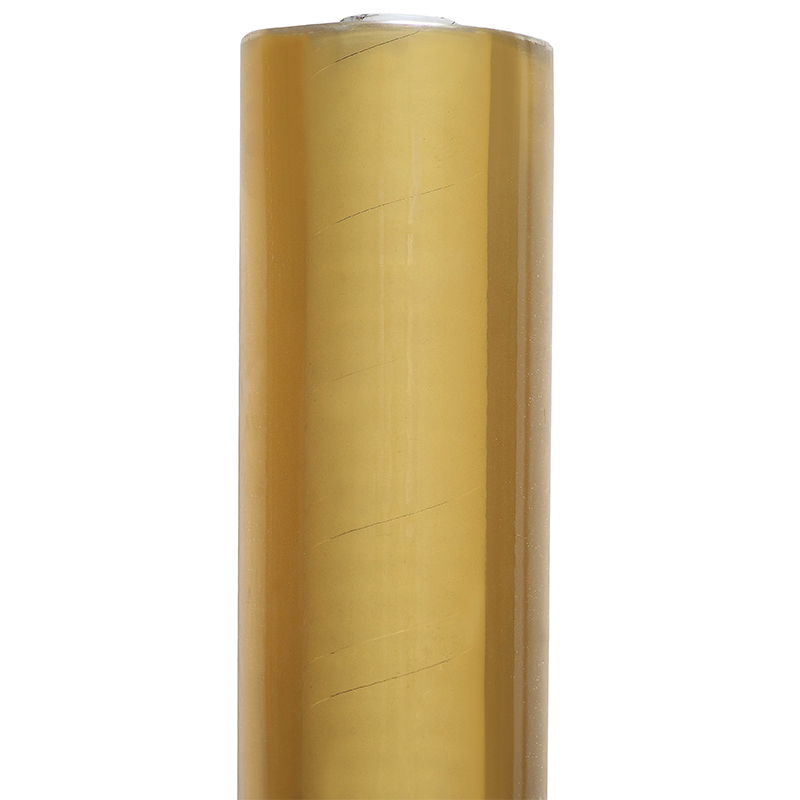
The way a PVC packaging film roll gets applied to a surface changes how the grain pattern appears. The roll comes off in one continuous length, and the pattern runs along that length. The installer must align the pattern correctly, or the grain will not flow smoothly across the surface.
Edge banding maintains visual continuity at the edges of panels. The banding material carries the same grain pattern as the main surface. When the banding aligns with the surface pattern, the edge becomes invisible. When the pattern does not match, the edge stands out and breaks the flow.
Avoiding overlaps and gaps keeps the pattern uninterrupted. An overlap covers part of the pattern on one panel and displaces the grain on the other. A gap leaves a space where the pattern is missing. Both defects disrupt the visual consistency.
The flexibility of the film affects how well it conforms to curved surfaces. A film that stretches easily wraps around corners without distorting the pattern. A film that resists stretching will pull the pattern out of shape. The film should handle the shapes in the project without losing the integrity of the grain pattern.
A few points about film handling and visual continuity:
- Align the pattern across adjacent panels during installation
- Use edge banding that carries the same grain pattern
- Avoid overlaps that displace the grain
- Avoid gaps that interrupt the pattern flow
- Choose film that conforms to the shapes in the project
Where Wood Grain PVC Film Makes Consistency Easier to Achieve
Large projects require many panels, and matching grain across all of them becomes a significant task. A kitchen with dozens of doors needs a consistent look across every door face. The film delivers that consistency because each door receives the same pattern.
Natural wood would require grading and sorting to achieve a similar level of uniformity. The wood would need to come from the same log or from logs with similar color and grain characteristics.
The film works well for projects that need repeatable results. A furniture line that uses the same design across many pieces needs consistent material. The film ensures that each piece looks the same, regardless of when it was produced or where it was installed.
Design scenarios where repetitive patterns are a feature also benefit from the film. The grain pattern becomes a design element that repeats across the space. The repetition creates a rhythm that supports the overall design.
What Finishing Steps Support the Visual Outcome
Protective coatings preserve the surface consistency over time. The coating protects the printed pattern from scratches, wear, and UV exposure. Without the coating, the pattern could fade or become damaged, and the visual consistency would be lost.
UV stability affects how the color holds up over time. A film that fades in sunlight will show uneven color across the surface. The areas exposed to light will lighten, while the areas in shadow will stay dark. The UV stability of the film helps maintain the color consistency.
Edge finishing contributes to the seamless appearance of the panel. The edge should carry the same finish as the face. A raw edge on a panel will stand out against the finished face. The edge should be finished to match the face.
Designing with a predictable material changes how the designer works. The designer can specify the grain direction and pattern placement with confidence. The film will deliver what the designer specifies.
The shift from matching wood to coordinating surfaces frees up the design process. The designer does not need to track down matching boards or adjust the design to accommodate natural variation. The design can be executed with the consistency of the film.
Consistency allows the designer to focus on other elements of the project. The grain pattern becomes a background element that supports the overall design. The designer can turn attention to color, form, and texture.
Uniformity has value in certain design contexts. A clean, modern look relies on smooth surfaces and consistent finishes. The grain pattern of the film supports that look by delivering a controlled, repeatable visual.
The consistency of the film reinforces the design intent. The grain runs in the direction the designer intended. The color holds across every panel. The surface looks the same from one end of the installation to the other.
The controlled grain patterns contribute to the overall aesthetic of the space. The pattern is part of the design rather than a variable that the design must accommodate. The consistency of the film makes the design possible.



 English
 русский
 Español
 عربى
عربى

 OverviewOur Super Clear PVC Film for tablecloths offers ultra-transparent protection while maintaining a sleek appe...
 OverviewReliable clear PVC film featuring a powdered, non-sticky surface and slightly lower clarity. Normal Clear P...
 OverviewSemi-transparent PVC film with matte finish, delivering light diffusion and a refined tactile feel. Flexibl...
 OverviewDecorative yet functional embossed PVC film combining color and surface texture for protective book covers....